
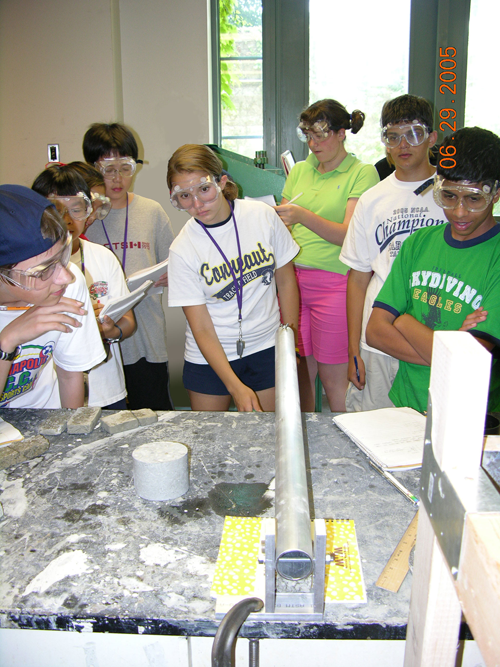
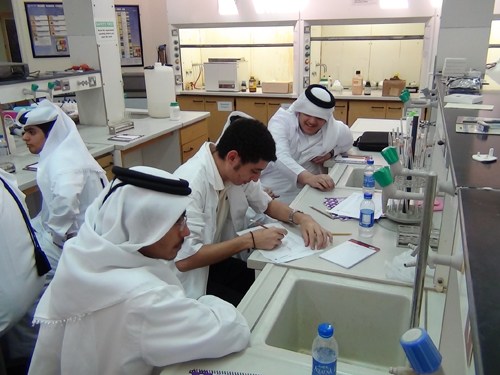
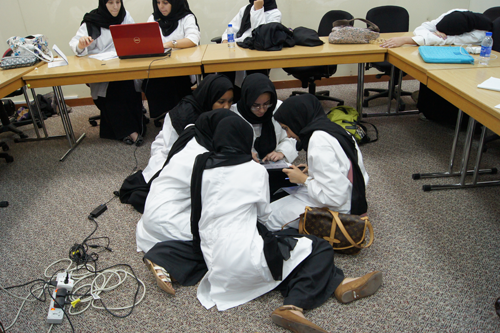
 In the fall of 2011, our research team conducted another pilot experiment using MWM modules in 13 independent secondary schools in Qatar over a two-month period between October and November of 2011. A total of eight modules were used with roughly 300 students at seven boys' schools and six girls' schools. Each module was implemented at the local school site and taught by a MWM staff member from Northwestern University, assisted by a Qatar University staff member (also a Qatar high school science teacher) as well as the classroom teacher and technicians. Typically, students at each school spent an entire week on one module predetermined for the school. The total time students were engaged in the module activities averaged about 10-12 hours, roughly 2.5-3 hours each day spread out over a four-day period. During the first two days, students worked in teams of 3-5 students and engaged in a series of 4-5 hands-on, exploratory experiments that focused on material properties and concepts central to the module theme. Students then spent the third and fourth days engaged in two design experiences. The first was a "structured" design challenge, which provided students a clear target and a goal to tie together their previous learning experiences. Throughout this "inquiry through design" process, students were expected to ask questions to inform their design decisions, weigh the inevitable trade-offs, debate about a particular design approach's values and limitations, connect these design decisions to scientific principles, make and test prototype designs, and generate data to validate their decisions. The second design challenge was an "open-ended" product design, relevant to the module theme, in which students were challenged to innovate and create an entirely new product or an improved product design based on the concepts they had learned. On the fifth and final day, students were given the opportunity to present the results of their design projects and share their module experiences with the staff at Qatar University's Materials Technology Unit.
 Based on three complete data sets (out of 13 classes) gathered to date, the pre-post assessments showed that students have made positive gains in the key concepts taught in all three modules: Nanotechnology, Polymers, and Composites. Though the sample size was small, there is a clear trend that students were progressing towards higher post-test scores. The combined average effect size from pre-test to post-test was 1.12. This encouraging result led the MWM team to continue its implementation efforts in the spring of 2012.
Results regarding students' attitudes, specifically self-efficacy were also studied. These results showed an improvement in the students' attitudes towards research and invention. The percentage of the students who strongly agreed that they were capable of invention increased from 12% to 24%, and those who agreed went from 40% to 60%. The percentage of students who strongly agreed with the statement regarding the importance of collaborative work increased from 40% to 48% while the students who strongly agreed that their skills had increased after participating in scientific experiments increased from 48% to 72%.
In conclusion, even from these preliminary data sets, we have seen a positive shift in students' gain of new scientific knowledge. The design projects have also solidified this knowledge as they demonstrated their ability to complete the design challenge, as well as showing their ingenuity in creating new or improved products.